
To sell your lake house on Lake Norman, put the Duke Energy dock permit in your name before listing, price the home on waterfront closings instead of an online estimate, gather the water-side paperwork, and photograph the dock with the water up. We are Wendy Atherton and Sean Herndon, Winston Dane at eXp Realty. Call or text 704-912-0999.
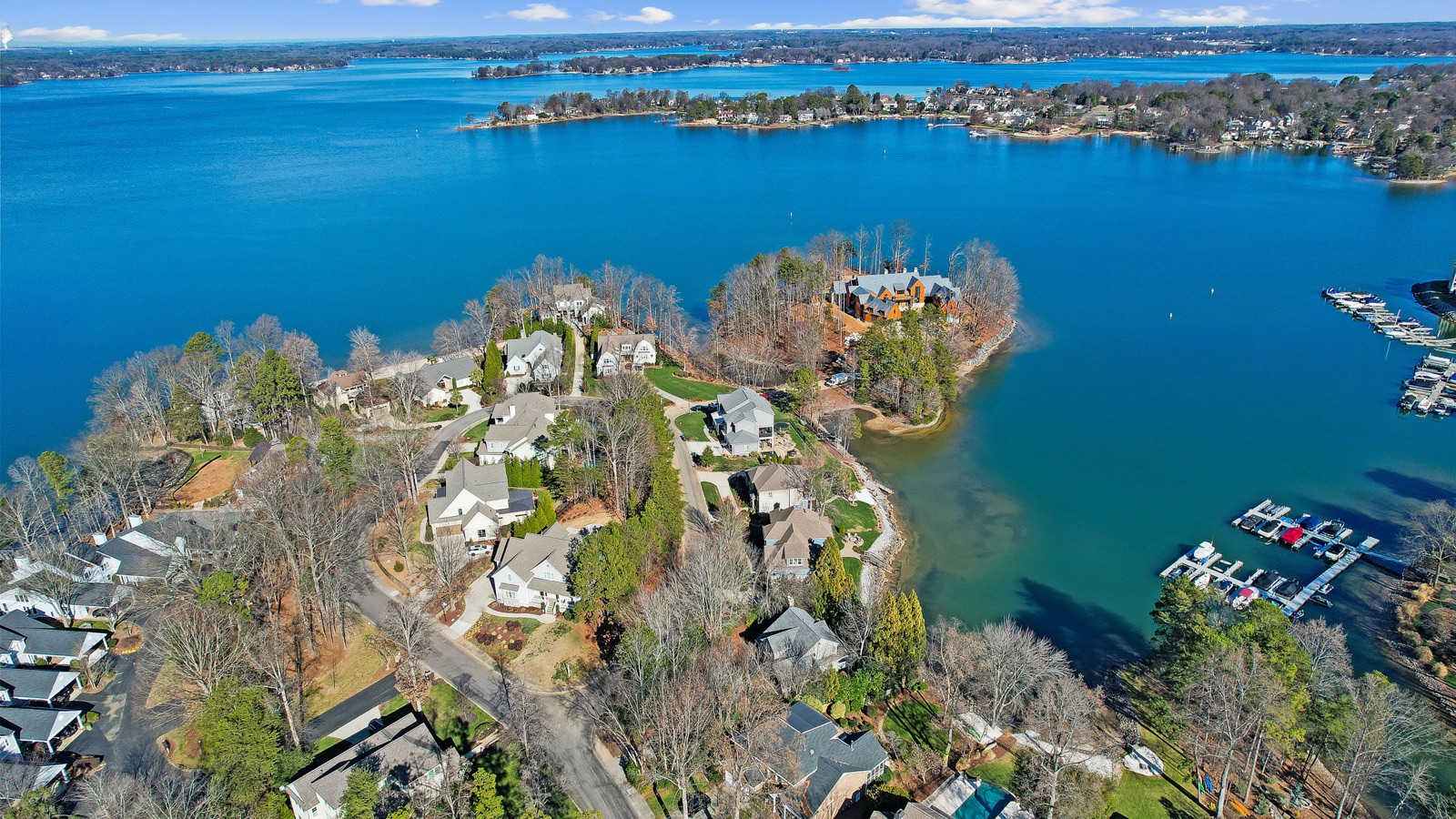
This guide is for anyone thinking about selling a home on the water, at any price, from Cornelius, Davidson and Huntersville to Mooresville, Troutman, Denver, Sherrills Ford and Terrell. Most of what goes wrong in a Lake Norman waterfront sale goes wrong at the water: a dock permit in a former owner's name, a price built on beds and baths, photographs taken in a drawdown. Each section answers one question sellers ask us, in the order we work through it.
Does the dock permit transfer when you sell? What Duke Energy requires before you list
No, not automatically. Lake Norman is a Duke Energy reservoir, and piers, docks, boat lifts and shoreline stabilization on a lot that touches the lake are permitted by Duke Energy Lake Services (800-443-5193, LakeServices@duke-energy.com) through Duke's online Lake Access Permit System, called LAPS. At a sale, the new owner applies to transfer the permit, Lake Services inspects the structure for changes made without approval, and, in Duke's words, the applicant or current owner "will likely be responsible for correcting" them.
The step most lakefront sellers have never heard of comes first. Duke gives a property's permitting history only to the current owner, and only if the permit is already in that owner's name. Not to agents, neighbors or buyers. If the permit was never transferred to you, you cannot pull your own record until you transfer it. So before listing:
- Check whose name is on the permit. If it is not yours, file the transfer in LAPS now. Duke allows your listing agent or dock contractor to submit it for you.
- Let the inspection happen while you control the timing, so an unapproved lift, roof or deck surfaces with time to fix it or price it.
- Pull the permitting history and keep the permit, the application and the tag number together for the listing file.
Read the full transcript
So, when you're getting ready to sell your home on the lake with a dock, one thing, or there's a few things, that we want to make sure that we're addressing up front. A lot of folks don't realize that when you purchase a home on the lake with a dock, the permit that was with the prior owner does not automatically transfer to you. You actually need to do that as a step in the process, right? So when you purchase a home and you close, hopefully you reached out to Duke and Duke moved it over to your name.
Now, look, if you're watching this video right now and you're like, "I never did that," don't panic. But it is something that you want to do, and I'm going to talk a little bit about why that is in a second. When you actually go through this process and request Duke to do this, they will come out and look at your dock to make sure that there's nothing that's deviating from what was permitted.
Now, this can be a big deal, and I'll give you a couple of examples that have happened around the lake. These were not my clients, but there was an actual example where buyers purchased the home, and they reached out to Duke to have the permit moved over to them. Duke came out and looked at the dock. Duke will actually even go back in time and look at old aerial pictures of the dock. And they had realized that some years prior there had actually been a topper on the dock, which was not allowed and had been removed.
So somebody put a topper on this dock, topper off. These people bought the house. The dock looked perfectly fine. Duke didn't like that and actually ended up requiring that this dock be removed, and it was a huge expense, as you can imagine.
So a lot of quality buyer agents will want to know that the permit is in your name, because that tells them that at some point, when you moved that permit over, Duke came out and validated that that dock was still a legal dock in terms of the permitting that's in place. So if you haven't done that, you should do that. And we actually have a letter, an email copy, that we can give you that you can send to Duke. They will only talk to you as the owner of the home. And then you'll get that handled.
So that's one thing you want to do. The copy of the placard that's on your dock: we take a picture of that. We want to make sure it's in your name and verify that. And if we can get the actual permit of your dock that was permitted, then we want to do that as well.
Now, depending on the situation of the property that's being sold, maybe your dock is beautiful, it's gorgeous, you spent a ton of money on it, it's top-notch. Or maybe it's a home where the dock needs some repairs, or maybe it's not in an optimal location. What we also will do is, we have an excellent partner who is a specialist in docks here in Lake Norman, and we can actually have him look at a property and give some recommendations up front in terms of modifications that might be possible.
So if you have a dock that might be limiting your property somehow, maybe the depth around the dock isn't ideal, or maybe it's not an ideal position in terms of how your house is located, we can also come up with some solutions in advance to give future buyers, potential buyers, a little bit more peace of mind and make your home that much more attractive.
The fee. Duke's Lake Services fee schedule effective January 15, 2025 lists "Transfer of Existing Facility" at $500. Duke's older 2016 shoreline guidelines described transfers as free, and the schedule says it can change without notice, so confirm the current figure with Duke Lake Services before you rely on it.
If the next owner wants a bigger dock. Duke answers actual applications, not hypotheticals. Its information sheet says a purchaser who needs a change should require the seller to get Duke's approval before closing; those approvals are good for one year and transfer to the new owner after closing.
The July 1, 2026 rule for lots without a house. Effective July 1, 2026, Duke Energy no longer reviews private dock applications where no home has been built on the adjoining lot. It covers private docks only, not shoreline stabilization. On a vacant lot, "you can add a dock later" is true only after a house is built, and the listing should say so.
What Duke allows at the water, and why it moves your price
A buyer pricing your lot is also pricing what could be built there. From Duke's Shoreline Management Guidelines (October 3, 2016, the version Duke links today):
| Duke rule (private, individual dock) | What it means for a seller |
|---|---|
| No farther than one-third of the distance to the opposite shoreline, or 120 feet lakeward of full pond, whichever is more limiting | In a narrow cove the dock you have may already be the largest the cove allows. Say so before a buyer assumes otherwise. |
| Up to 1,000 square feet and two slips or lifts | An older dock larger than today's limit can stay, but it may not take additions, including a roof or deck over an existing part. |
| A lot with less than 100 feet of shoreline cannot get a new pier unless it was subdivided and recorded before September 1, 2006 | Your shoreline footage and your plat date are value facts. Have both on paper. |
| One dock per lot, with exceptions for docks Duke permitted before June 1, 1996 | A second structure on the lot needs its own answer from Duke. |
The 760 line and the 50-foot buffer
Lake Norman's full pond is 760.0 feet above mean sea level. Duke reports lake level on a scale where full pond is 100. On land, North Carolina's Catawba River buffer rule (15A NCAC 02B .0614, regulated by the state Department of Environmental Quality, not by Duke) sets a 50-foot buffer measured landward from full pond: Zone 1 is the first 30 feet, left undisturbed except for the uses the rule allows, and Zone 2 is the next 20 feet of managed vegetation. If the listing will say there is room for a pool on the lake side, check the buffer against the survey first. The full walkthrough is in our post on selling a Lake Norman home with a dock.
What is your lake house worth? The seven inputs that set the price
An online estimate prices your home off nearby sales adjusted for beds, baths and square feet, the things that matter least on the water. Two lake houses three lots apart can sell six figures apart. These are the seven inputs we weigh, in the order Wendy lists them:
| Input | What the buyer is paying for | What to document |
|---|---|---|
| 1. Location | Town, county tax rate, and where on the lake: main channel with big water, or a protected no-wake cove | Which county the parcel is in; whether the water in front of the dock is a cove or open channel |
| 2. Water frontage | Feet of shoreline, which also decide what dock the lot can carry (see the 100-foot rule above) | Shoreline footage from the survey or plat; the plat's recording date |
| 3. Water depth | Whether the boat floats at the dock in a dry year, not just in June | Depth at the end of the dock, with the date and Duke's lake-level reading that day |
| 4. The dock | The structure, the lift, the slips, and a permit that matches what is in the water | Permit in your name, square footage on the permit, lift make and capacity |
| 5. Access | The route from the dock to open water, including any bridge a tall boat has to clear | A plain description of the route to the main channel and any bridge on it |
| 6. Flat or sloped | Whether the walk to the dock is a stroll or a staircase, and how the lot meets the water | Photos of the path from the house to the dock; any shoreline stabilization permits |
| 7. Usable land | Room for a pool, a lawn or an addition after the buffer and the setbacks | A survey showing the 760 line and the 50-foot buffer |
Cove or main channel. Big open water and a quiet cove draw different buyers. Neither is "better"; the price follows how well the home is matched to the buyer who wants that water.
Depth at low water. A shallow cove looks its worst when the lake is down. Measure the depth at the end of the dock, note the date and Duke's reading, and put it in the listing file. A number with a date answers the question before it becomes a discount.
Bridges between the dock and the channel. A boat with a tower, a sailboat mast or a tall cruiser may not clear every bridge on the lake. If a bridge sits between your dock and the main channel, say so; the buyer who needs to clear it will check anyway.
When the comps run thin. On the water there are few truly comparable closings, and an appraiser works from closed sales like everyone else. Give the appraiser the water facts in writing: shoreline footage, the permit and its square footage, depth at a stated lake level, cove or channel. And no dock is a detail, not a verdict: a home without one is priced on what it does have.
For the longer version of how a waterfront number is built, read How much is your lake house worth?, or run the free Waterfront Seller Check: eight questions about the water, result on the page, nothing to enter.
What is the Lake Norman waterfront market doing? One defined, dated set
Published Lake Norman waterfront figures disagree because they count different things: some mix in water-view and access-only homes, some use averages, others medians, over different months. Here is one set, defined, from our Lake Norman market report:
| Verified direct-frontage closings, Lake Norman, May 2026 | Figure |
|---|---|
| Closings across the lake's four counties | 22 |
| Median sale price | $1,653,982 |
| Median price per square foot | $606 |
| Average share of asking price received | 96.6% |
| Range of sale prices | Mid-$400,000s to $12.5 million |
| Share that closed under $1.5 million | 45% |
| Mooresville | 11 of the 22 closings, median $1.465 million |
| Denver | 4 closings, median $1.86 million |
| Cornelius | 2 closings, average $3.56 million |
The range is the point. When the same lake produces closings from the mid-$400,000s to $12.5 million in a month, a lake-wide median tells you very little about one house. Your number comes from the closings on water like yours.
When is the best time to sell a lake house on Lake Norman?
Interest in the lake follows the boating season. Over the five years to October 19, 2026, Google search interest in "lake norman waterfront" ran highest in July and June and lowest in November and December (Google Trends, United States). That does not make winter a bad month to list; it makes winter the month to get ready. Aiming at spring? Have the valuation conversation in winter and the house ready to photograph before the season starts. The month-by-month closing numbers, waterfront and off, are in our report on the best time to sell a house on Lake Norman.
Low-water years change what a buyer sees. 2026 is one. The Catawba-Wateree basin entered Stage 2 of the Low Inflow Protocol on May 1, 2026, and the City of Hickory's drought page still showed Stage 2 when it was updated on October 16, 2026. On May 18, 2026, WBTV reported Lake Norman at 94 feet on Duke's scale, against a May five-year average of about 98, with four ramps closed at Blythe Landing. In a year like this:
- Check Duke's lake level the day before showings and photographs (Duke's lake-level line is 800-829-5253, and the free Lake View app shows the same reading).
- Photograph the dock and the water side when the water is up, and keep those photos dated. Never present full-pond photos as today's conditions.
- Have the depth at the end of the dock on paper, with the date and the reading, so a buyer touring at low water can see what the dock looks like at full pond.
The seller document packet: what to gather before you list
Waterfront buyers and their attorneys ask for all of this. Having it ready on launch day keeps due diligence short and keeps open questions from turning into price conversations. Print this list; nothing to sign up for.
The dock and the shoreline
- Duke pier permit and its application, in your name (transfer through LAPS if not)
- Your permitting history from Duke Lake Services, 800-443-5193 (released only to the owner named on the permit)
- A photo of the permit tag number on the pier
- Permits for any riprap, seawall or other shoreline stabilization
- A plain list of anything added since the permit was issued: a lift, a roof, a slip extension, a second deck
- Dock electrical: who wired it, when, and any permit or inspection record
- Boat lift: make, capacity, age and service records
- Depth at the end of the dock, with the date and Duke's lake-level reading
The land
- A current survey showing the shoreline, the 760 line and the 50-foot buffer
- Shoreline footage and the plat's recording date
- Septic and well records, if the home is on either (see selling a house with a septic system near Lake Norman)
Costs and coverage
- Flood zone status from the FEMA map, plus an elevation certificate if you have one
- A current homeowners (and flood, if carried) insurance quote
- The most recent property tax bill
- HOA documents, covenants and any slip or dock rules
The packet is also how a seller who is ready to downsize, or moving up the shoreline, makes the sale feel smaller: one folder, assembled once, handed over on day one.
North Carolina disclosures, closing costs and taxes
The disclosure statement. North Carolina sellers give buyers the Residential Property and Owners' Association Disclosure Statement before an offer (N.C.G.S. Chapter 47E). Flood questions were added effective July 1, 2024: whether the property is in a designated flood hazard zone, past flood damage, current flood insurance, an elevation certificate, flood claims, and federal disaster aid. Sellers also give the separate Mineral and Oil and Gas Rights Mandatory Disclosure Statement (G.S. 47E-4.1). The form does not ask about Duke permits by name. If you know of a structure at the water that was never permitted, ask a real estate attorney how to handle it before you list; Duke's own FAQ sends property-line and easement questions to an attorney, and so do we.
Who pays what. North Carolina's excise tax on a deed is $1 for each $500 of the price (G.S. 105-228.30), customarily paid by the seller, and North Carolina closings run through an attorney. Commissions are negotiable and written into the listing agreement. Our cost-to-sell guide walks through every line.
How the 2027 county revaluations affect a Lake Norman sale
Lake Norman touches four counties, and all four are on four-year revaluation cycles that point to 2027:
- Mecklenburg (Cornelius, Davidson, Huntersville): revaluation effective January 1, 2027. The county's September 2, 2026 update reported a median increase of about 15% for residential parcels in its initial review. Notices go out in early 2027; town presentations are scheduled in Davidson (October 27), Cornelius (November 2) and Huntersville (November 17, 2026).
- Lincoln (Denver): next reappraisal effective January 1, 2027. Notices typically go out in February, with an informal appeal window of up to 30 days after mailing.
- Iredell (Mooresville, Troutman, Statesville): the NC Department of Revenue's county table lists the next scheduled reappraisal as 2027; the last took effect January 1, 2023.
- Catawba (Sherrills Ford, Terrell): the county revalues every four years, and the last took effect January 1, 2023.
What it means for a seller: a buyer in 2027 will ask what the new assessed value and tax bill are, and the county's tax rate is a real part of a buyer's monthly cost. Keep the latest tax bill in the packet, and if your notice arrives while the home is listed, we put the new figure in front of buyers rather than let them guess.
How we market a Lake Norman lake house
Every listing we take gets the same written plan, handed to you before launch. These are the parts that matter most on the water, all of them built and running today (the full list of thirteen is on How we market your home):
- The lake side is the front door. For a waterfront buyer the first impression is the dock, the stairs down, the yard facing the lake and the view from the main rooms. That is where prep and photographs start.
- One media day: professional photography, a full-length listing film published to YouTube, and three short vertical cuts. Our films follow a written standard: the camera moves, the house does not, and nothing in a photo is altered.
- The water facts in writing: frontage, depth with its date, permit status, dock and lift details and the route to the main channel go into the listing and the home's own pages, so buyers from out of the area can judge the water before they visit.
- Coming Soon, then one Day 0: we build the audience while the home is Coming Soon, then the Canopy MLS and the portals that feed from it, paid Facebook and Instagram under Housing rules, email to our own buyer database, printed mail with QR codes, and a yard sign with a QR code all go live together.
- A written update every week on every active listing: showings, feedback and what changes next, good news or not.
If you are thinking about selling but not this season, start with the number and the plan. Both are free and yours to keep.
How to choose a Lake Norman waterfront listing agent
Ask every agent you interview the same questions, including us:
- Which waterfront closings is your number built on, and which one is closest to this water?
- Will you confirm the dock permit is in our name and pull the history before listing? What happens if the dock does not match the permit?
- How will the listing show the depth, the frontage and the route to the main channel?
- What exactly goes into the marketing, in writing, before we sign?
- How often will we hear from you once it is listed, and in what form?
- What is your license number? Check it yourself on the North Carolina Real Estate Commission's licensee lookup. Ours: Wendy Atherton 305942, Sean Herndon 299279.
When you are ready to talk, the Seller Strategy Call is 15 minutes, free, with no pitch. Whoever you list your home with, take the questions above with you.
Which Lake Norman waterfront properties have we sold?
These are lake houses on Lake Norman, in Cornelius, Mooresville and Denver, that we sold for their owners, with the closed price from the Canopy MLS and which of us handled each one. See every home on our past sales page.
Pointe Regatta · Cornelius
$2,196,800
Pointe Regatta Drive
5 bed · 4.5 bath · 4,145 sq ft · Waterfront
Seller's agent · Sean Herndon
Havenview Drive · Cornelius
$1,800,000
3 bed · 3 bath · 4,006 sq ft · Waterfront
Seller's agent · Sean Herndon
Pinnacle Shores · Mooresville
$951,000
Emerald Point Lane
4 bed · 3.5 bath · 3,227 sq ft · Waterfront
Seller's agent · Sean Herndon
Sisters Cove · Mooresville
$950,000
Sisters Cove Court
3 bed · 2.5 bath · 2,473 sq ft · Waterfront
Bought with us, later sold with us · Wendy Atherton
Little Creek Drive · Denver
$725,000
2 bed · 2 bath · 1,147 sq ft · Waterfront
Bought with us, later sold with us · Sean Herndon
Sagemore Road · Mooresville
$665,000
2 bed · 2 bath · 1,134 sq ft · Waterfront
Seller's agent · Wendy Atherton
Closed prices from the Canopy MLS. Street names only, out of respect for the people who live there now. More of our Lake Norman closings, on both sides of the table, are on Lake Norman luxury and waterfront.
Common questions about selling a lake house on Lake Norman
Does a Lake Norman dock permit transfer to the buyer?
Docks and shoreline use on Lake Norman are permitted through Duke Energy's Lake Services. When a sale closes on Lake Norman, the new owner needs to reach out to Duke to move the permit into their name. Duke will typically come out and review the dock, then issue the permit in the new owner's name. It is not an automatic process.
What if the dock or seawall was never permitted?
Find out before a buyer does. The buyer's side will ask during due diligence, and an open question at that point costs more than one answered before listing. Ask Duke Lake Services what the record shows and what fixing it involves, then price the house with that answer in hand.
What is the Lake Norman shoreline buffer?
Lake Norman falls under the Catawba River buffer rules. Typically, that's 50 feet measured back from full pond, with the first 30 feet left undisturbed and the next 20 feet limited. That's why buyers ask whether trees can be cleared for a better view. Knowing that answer for your lot keeps it from becoming a negotiation.
What paperwork should a waterfront seller gather before listing?
The dock and shoreline permits, a survey that shows the shoreline, records of any seawall, dock or dredging work, the flood zone status and a current insurance quote, and the HOA documents if there are any. Waterfront buyers ask for all of it, and having it ready on launch day keeps due diligence short.
Is there capital gains tax on selling a lake house that was a second home?
The federal exclusion of $250,000 per person, or $500,000 on a joint return, applies to a main home owned and lived in for two of the last five years. A lake house used as a second home generally does not qualify, so the gain may be taxable. Your use history matters, so talk it through with a tax professional before you list.
What should be fixed first on a lake house before listing?
Start with the side that faces the water. For a waterfront buyer, the lake side is the front door: the dock, the stairs down, the yard facing the lake and the view from the main rooms. That is where the photos and the first impression are made, so it is where the prep money goes first.
Sources
Each source was read on its own site on the date shown. Rules and fees change; check the source before relying on any of it.
- Duke Energy, Lake Use Permitting FAQ (PDF, rev. January 2024): transfers through LAPS, the transfer inspection, permit history released only to the owner named on the permit, third-party applications, lake-level line 800-829-5253 and the Lake View app. Read October 19, 2026.
- Duke Energy, Permits for Shoreline Activities: LAPS and the July 1, 2026 rule for lots with no home built. Read September 24, 2026.
- Duke Energy, information sheet for prospective lake property owners (PDF): approvals before closing, good for one year and transferable. Read September 24, 2026.
- Duke Energy, Lake Services Fee Schedule, effective January 15, 2025 (PDF): Transfer of Existing Facility, $500. Read October 19, 2026.
- Duke Energy, Catawba-Wateree Shoreline Management Guidelines, October 3, 2016 (PDF): dock length, size, slips, the 100-foot shoreline rule and the September 1, 2006 date, non-conforming docks, one facility per lot. Read October 19, 2026.
- Duke Energy, Catawba-Wateree Shoreline Management Plan: Lake Norman full pond, 760.0 feet. Read September 24, 2026.
- 15A NCAC 02B .0614, Catawba River Basin riparian buffers: the 50-foot buffer, Zone 1 (30 feet) and Zone 2 (20 feet), uses existing June 30, 2001. Read September 24, 2026.
- WBTV, May 1, 2026: the basin enters Stage 2 of the Low Inflow Protocol. WBTV, May 18, 2026: Lake Norman at 94 feet against a May five-year average of about 98; ramps closed at Blythe Landing. Read October 19, 2026.
- City of Hickory, drought page (updated October 16, 2026): Stage 2 in effect since May 1, 2026. Read October 19, 2026.
- Google Trends, "lake norman waterfront", United States, past five years: highest interest in July and June, lowest in November and December. Pulled October 19, 2026.
- Winston Dane, The Lake Norman Real Estate Market Report, Q3 2026 (compiled August 2026): verified direct-frontage closings, Canopy MLS data, May 2026.
- NC Real Estate Commission bulletin on the Residential Property and Owners' Association Disclosure Statement, and WHQR, July 1, 2024 on the flood questions effective that day. Read October 19, 2026.
- N.C.G.S. 47E-4.1, Mineral and Oil and Gas Rights Mandatory Disclosure. Read October 19, 2026.
- N.C.G.S. 105-228.30, excise tax of $1 on each $500 of consideration. Read October 19, 2026.
- IRS Topic 701, Sale of your home: the $250,000 / $500,000 exclusion and the two-of-five-years test.
- Mecklenburg County, 2027 revaluation update, September 2, 2026; Lincoln County revaluation FAQ; Catawba County revaluation page; NC Department of Revenue, 2025–2026 county tax rates and reappraisal years. Read October 19, 2026.
- Example homes: closed prices, beds, baths and square feet from Canopy MLS records for each property, as shown on our past sales page; water tags from our hand-checked MLS waterfront list.