
North Carolina does not require a septic inspection when you sell a house, but nearly every buyer orders one during due diligence, and the septic permit decides how many bedrooms you can legally advertise. We are Wendy Atherton and Sean Herndon, Winston Dane at eXp Realty, and we help owners in Lake Norman or Greater Charlotte sell a house on septic without surprises. Call or text 704-912-0999. Many lake houses and older homes in Mecklenburg, Iredell, Lincoln and Catawba counties are on septic rather than town sewer, and it does not stop a sale. What causes trouble is a permit nobody pulled, a bedroom count that does not match the paperwork, or a drain field that fails a buyer’s inspection weeks before closing. Each section below takes one of those, in the order we handle it.
Who you’ll work with
Wendy Atherton, Broker/Owner · NC License 305942 · licensed NC broker since 2018
Sean Herndon, Broker/Owner · NC License 299279 · licensed NC broker since 2017
Winston Dane at eXp Realty · 106 Langtree Village Dr, Mooresville NC · call or text
704-912-0999. You get both of us on your file either way.
Not legal advice. We are real estate brokers, not attorneys, engineers or septic inspectors. This page summarizes North Carolina’s wastewater rules (15A NCAC 18E), the statutes in G.S. Chapter 130A, Article 11 and G.S. Chapter 90A, Article 5, and county environmental health pages, each read in November 2026. Your county environmental health office has the final word on your system, and a North Carolina real estate attorney should answer anything about your contract or your disclosure.
Does North Carolina require a septic inspection when you sell a house?
No. No North Carolina statute requires an inspection of an existing septic system when a house in Lake Norman or Greater Charlotte changes hands. The state’s wastewater statute, G.S. Chapter 130A, Article 11, says a system’s improvement permit and construction authorization are not affected by a change of ownership as long as the site and the building the system serves are unchanged (G.S. 130A-336), and the inspections it requires happen after a system is installed or repaired (G.S. 130A-337), not at a sale.
What the law does regulate is who may do the inspection when one is ordered. Under G.S. 90A-71 and 90A-72, an inspection requested by a lender, a real estate broker, a prospective purchaser or another party as a condition of a sale, refinance or transfer must be done by an inspector certified by the North Carolina On-Site Wastewater Contractors and Inspectors Certification Board (NCOWCICB). A general home inspector who is not certified cannot sign off on the septic system. Doing it without the certification is a Class 2 misdemeanor (G.S. 90A-81).
In practice, the buyer orders it. The North Carolina Real Estate Commission lists septic inspections among the inspections a buyer does during the due diligence period, and the buyer can walk away for any reason during that period. More on that window in our guide to the due diligence period in North Carolina.
Where are the septic permit records for a Lake Norman house?
At the county environmental health office for the county the house sits in. Lake Norman touches four counties, and each keeps its own records and its own way of handing them out.
| County | Lake Norman and Greater Charlotte towns | Where the septic records are |
|---|---|---|
| Mecklenburg | Charlotte, Cornelius, Davidson, Huntersville | Groundwater and Wastewater Services (980-314-1680). The county posts a public “Septic Permit Records” portal from that page. |
| Iredell | Mooresville, Troutman, Statesville | Onsite Water Protection. Most permits are on the county GIS map under the parcel’s septic records tab; it shows the latest operation permit. If the permit is not there, ask Onsite Water Protection or use the county’s public records request. |
| Lincoln | Denver | Environmental Health (704-736-8426). Copies of a septic permit or map are requested through the county’s public records request form, with the address or parcel number. |
| Catawba | Sherrills Ford, Terrell | Environmental Health. The county has an online request for a copy of an existing septic permit. |
County pages checked November 7, 2026. Records procedures change; call the office if a link has moved.
Ask for the operation permit, the improvement permit and any site plan or drawing in the file. Under 15A NCAC 18E .0205, an operation permit lists the number of bedrooms, the design daily flow, the tank’s location and capacity, the dispersal field layout, and a site plan showing the system and its repair area. That one document answers most of what a buyer’s inspector and a buyer’s attorney will ask. If the county has nothing on file, that is an answer too, and it goes on the disclosure statement as “No Records Available.”
How many bedrooms does your septic permit allow, and why does it matter?
It matters because North Carolina sizes a septic system by bedrooms, and the disclosure form asks you for the permitted number. On a Lake Norman or Greater Charlotte house, the bedroom count in the listing should match the permit.
- The design flow. Under 15A NCAC 18E .0401 (as amended effective June 1, 2026), the minimum design daily flow for a house is 120 gallons per day per bedroom, or 60 gallons per day per person when occupancy exceeds two people per bedroom, whichever is greater. A three-bedroom permit is designed for 360 gallons per day; a fourth bedroom raises that to 480.
- What counts as a bedroom. 18E defines a bedroom as any room defined as a sleeping room in the North Carolina Building Code. A finished basement room or a bonus room with a closet can be one in a buyer’s eyes and not one on your permit.
- The disclosure question. On the Residential Property and Owners’ Association Disclosure Statement (form REC 4.22, REV 7/26), question C4 asks what sewage system serves the house and, if it is septic, “how many bedrooms are allowed by the septic system permit,” with a box for “No Records Available,” plus the date the system was last pumped. Question C5 asks whether there is a problem, malfunction or defect with the septic system. Our guide to the North Carolina seller disclosure statement covers the rest of the form.
- Adding a bedroom later. Under 15A NCAC 18E .0206(d), an increase in design daily flow needs a construction authorization from the county (or a notice of intent to construct from an Authorized On-Site Wastewater Evaluator) before work starts. A bedroom added without one is a permit problem the next buyer’s attorney can find.
If the house has more rooms than the permit allows, there are two honest ways to list it: describe the extra rooms as what the permit makes them (an office, a bonus room) and price on the permitted count, or apply to the county to expand the system before you list. Advertising the higher number and hoping is not one of them.
What do buyers’ inspectors and lenders look for?
A buyer’s certified septic inspector wants to find the tank, open it, see how it is working and walk the drain field. A buyer’s lender wants to know the system is working and meets the local health department’s rules.
- Access. If the tank lids are buried, the inspector has to dig to find them. Knowing where the tank is (the site plan in your county file shows it) saves time and the cost of locating it.
- Pumping and maintenance history. The U.S. Environmental Protection Agency says the average household septic system should be inspected at least every three years by a septic service professional, and household tanks are typically pumped every three to five years (EPA, How to Care for Your Septic System). A dated pumping receipt answers the “last pumped” line on the disclosure.
- The drain field. The EPA’s care rules are the same things an inspector notices when they are broken: no parking or driving on the drain field, and trees planted far enough away that roots stay out of the system.
- FHA loans. HUD’s FHA Single Family Housing Policy Handbook 4000.1 (Update 18, issued August 12, 2026) has the appraiser visually observe the septic system and the area around it and require an inspection if there are readily observable signs of system failure. Where connecting to public or community sewer is not feasible at a reasonable cost, an existing system is acceptable to FHA when it functions properly and meets the local health department’s requirements.
- VA and other loans. Each loan program has its own property rules. When an offer comes in with VA, USDA or conventional financing, we ask the buyer’s lender early what it needs on the septic system so nothing surfaces in the final week.
Pumping, the drain field and the repair area: what goes wrong at a sale?
Most septic surprises at a Lake Norman or Greater Charlotte closing come from the ground around the system, not the tank. Three things to check before a buyer does:
- The repair area. North Carolina permits most systems with a reserved repair area: ground classified suitable and held back for replacing part or all of the system if it fails (18E .0105). Under 18E .0508(h), the initial and repair areas cannot be altered so the permitted system can no longer be installed and work. A pool, a garage or a driveway built over the repair area is a finding.
- Additions near the system. Under 18E .0206(a) and (b), a site change that needs a building permit, such as a pool or a storage shed, needs an existing system approval first, issued by the county, an Authorized On-Site Wastewater Evaluator or a certified inspector, confirming it meets the setbacks to the system. The state setback table puts a building foundation or deck footing at least 5 feet from any part of the system (18E .0601).
- Advanced systems. A system with a pump, drip lines or advanced treatment may carry an operation permit that expires after five years (18E .0205 for Type V and VI systems) and a required contract with a management entity. If yours does, have the current permit and the management contract in the file.
If something has failed, the repair itself is permitted by the county. Mecklenburg County lists no fee for a residential septic repair permit, and $100 for its “use existing system” permit (fee schedule, read November 7, 2026). The contractor’s work is a separate cost.
How close can a septic system be to Lake Norman?
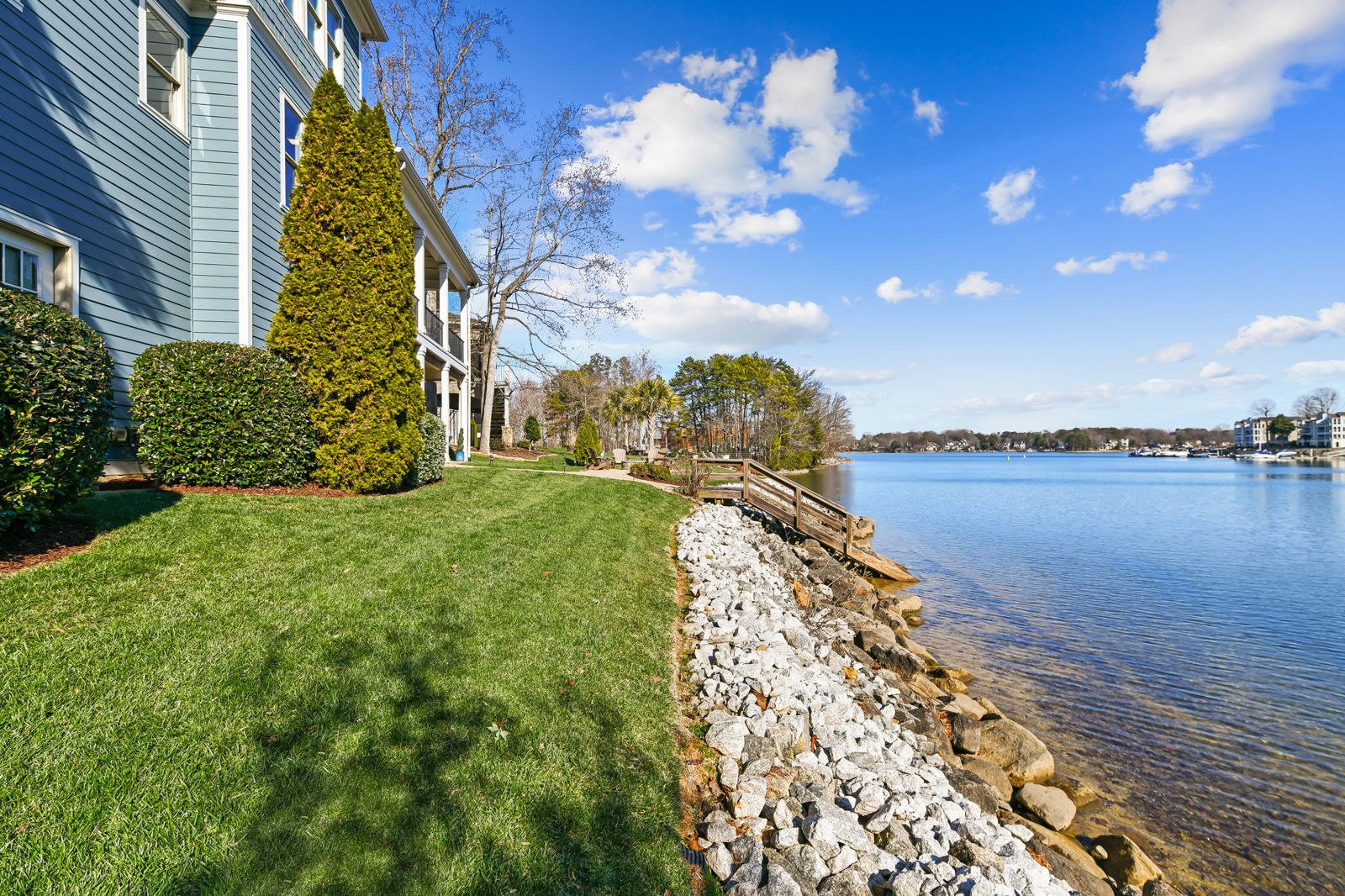
At least 50 feet from a lake’s normal water level, under the state setback table in 15A NCAC 18E .0601, and 100 feet from a Class I or Class II reservoir. The county decides which line applies to a given Lake Norman lot when it permits the system, which is one more reason to read the site plan in your file rather than guess. The same table puts a system at least 50 feet from a private drinking-water well serving a house. These are the setbacks for permitting a system today; an older system was permitted under the rules in force when it went in, so ask the county how the current table applies to yours.
The water side brings its own paperwork: the Duke Energy dock permit, the shoreline and the state buffer. Our Lake Norman waterfront seller guide walks through all of it, so this page sticks to the septic system.
What does it cost to sell a house on septic?
The county pieces cost little or nothing; the work on the ground is what moves the number. We do not print a price for an inspection, a pumping or a repair, because no official source publishes one and contractor quotes vary job to job. What drives the cost:
- Finding the tank. A tank with risers at the surface is quick; a buried tank with no site plan takes digging or locating.
- Pumping. Some inspections include pumping or require it, and a tank that is due gets pumped either way.
- The system type. A conventional gravity system is the simplest to inspect. Pump tanks, drip systems and advanced treatment units have more parts to check and, for some, a management contract to keep current.
- The repair, if one is needed. Soil, slope, the space left on the lot and the setbacks to the lake and the well decide what a repair can be and where it can go.
Every other line that comes off your sale price, from commission to the state excise tax, is in what it actually costs to sell a house in North Carolina.
What should you do before you list?
Get ahead of the buyer’s inspector by about a month. This is the order we work in when someone thinking about selling a house on septic calls us:
- Pull the operation permit and site plan from the county, and read the bedroom number.
- Compare that number with how the house is used and how it would be marketed. Settle any gap now.
- Find a dated pumping receipt, or have the tank pumped and keep the receipt.
- Consider a pre-listing inspection by an NCOWCICB-certified inspector, so a problem shows up on your schedule instead of the buyer’s.
- Make the lids reachable and mark where the tank is.
- List anything built since the permit was issued: a pool, a shed, an addition, a finished basement.
- Answer questions C4 and C5 on the disclosure from the paperwork, not from memory.
Fix it before listing, offer a credit, or sell as-is?
If the inspection turns up a problem, there are three ways to handle it, and each one changes who carries the risk and the timeline.
| Fix before listing | Offer a credit | Sell as-is for cash | |
|---|---|---|---|
| What it means | You hire the contractor, the county permits and inspects the repair, and you list with the paperwork done. | You list, the buyer’s inspection finds the issue, and the price or a closing credit is negotiated to cover it. | A cash buyer purchases the house as it stands, septic and all. |
| Who handles the repair | You, before closing. | The buyer, after closing, if the lender allows it. | The cash buyer, after closing. |
| Financing | Opens the house to FHA, VA and conventional buyers with a clean report. | A lender may require the repair before closing, which can turn a credit back into a repair. | No lender, so no lender septic requirement. |
| Your walk-away number | The repair cost comes out up front; the price reflects a working system. | The credit comes off at closing, usually after a negotiation under deadline pressure. | A lower top line with fewer subtractions and no repair to manage. |
| Works best when | The problem is defined and the repair is permittable on the lot. | The issue is small and the buyer’s lender is comfortable with it. | The repair is large, uncertain, or you need a closing date more than the top dollar. |
Cash offers and listed homes. Cash offers through our network are not available on a home that is currently listed with an agent. If your house is listed right now, talk with your listing agent first.
To see a cash number next to a listing number with the same subtractions on each, read selling your house for cash: both numbers, side by side.
Who is this guide not for?
It is not for a house on town or county sewer; check your utility bill or the disclosure’s sewage question if you are unsure. It is not for new construction that has never been lived in, which North Carolina exempts from the disclosure statement. And it is not a substitute for the county or a certified inspector: if the system is backing up or surfacing now, call your county environmental health office first and talk about selling second.
Want to know what my house is worth with the septic question settled? That is the first thing we answer on a Seller Strategy Call: 15 minutes, free, with the permit and the price in the same conversation.
Common questions
Is a septic inspection required to sell a house in North Carolina?
No statute requires one at a sale. Buyers usually order one during due diligence, and when an inspection is done for a sale it must be done by an NCOWCICB-certified inspector under G.S. 90A-72.
Can I list my home with four bedrooms on a three-bedroom septic permit?
The disclosure statement asks how many bedrooms the permit allows, so the gap shows. Either market the extra room as what the permit makes it, or ask the county about expanding the system before you list.
How often should a septic tank be pumped?
The EPA says household tanks are typically pumped every three to five years and the system should be inspected at least every three years. A dated receipt answers the disclosure’s “last pumped” question.
Does the septic permit transfer to the buyer?
Generally, yes. Under G.S. 130A-336, the improvement permit and construction authorization are not affected by a change of ownership as long as the site and the building the system serves are unchanged, and under 15A NCAC 18E .0205 the operation permit stays in effect while the flow is unchanged, the system is maintained and it is not malfunctioning. Ask the county to confirm for your system.
Can I sell a house with a failing septic system?
Yes, as long as you disclose it. You can repair it under a county permit before listing, negotiate a credit, or sell as-is to a cash buyer. Which one nets more depends on the repair and the timeline.