
Before you buy a waterfront home on Lake Norman, confirm seven things: that the dock matches a Duke Energy permit in the seller’s name, where your lot stops at the 760-foot full-pond line, the water depth at a stated lake level, the FEMA flood zone, the septic permit if the house is on septic, the condition and permits of the seawall or riprap, and the community’s rules at the water. We are Sean Herndon and Wendy Atherton, Winston Dane at eXp Realty, and we represent buyers on Lake Norman. Call or text 704-912-0999. On the water, the questions that decide a purchase are rarely about the kitchen. They are about the ground and the lake in front of the house, most of it governed by Duke Energy, the state and the county rather than by the seller. Each section below takes one of those questions, in the order we work through it with a buyer.
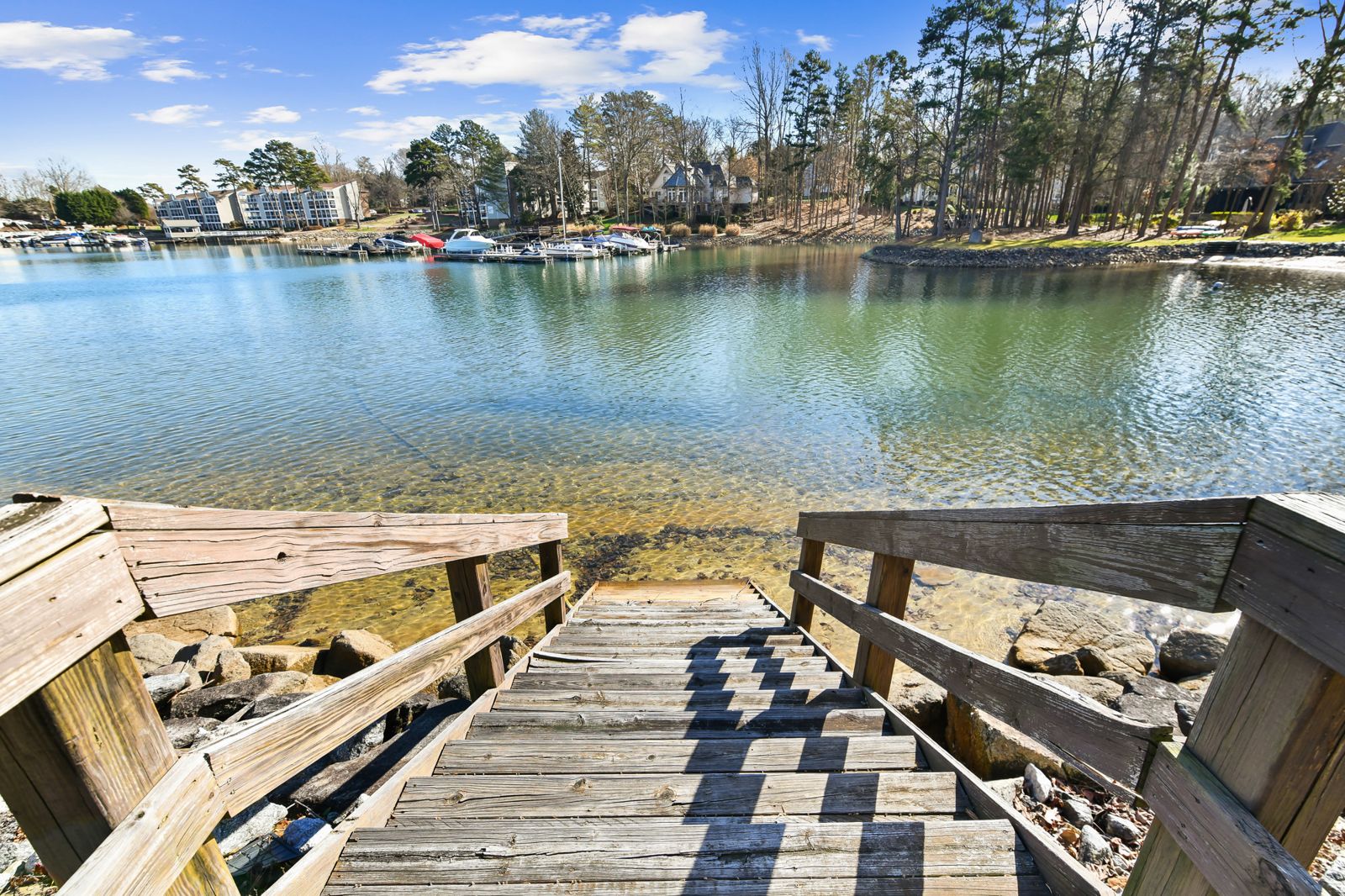
This guide is for anyone planning to buy a waterfront home anywhere on the lake, from Cornelius, Davidson and Huntersville to Mooresville, Troutman, Denver, Sherrills Ford and Terrell, including buyers relocating to Lake Norman who will do much of it from out of state. Prices, town by town, and the difference between a private dock, a deeded slip and a water view are on our Lake Norman waterfront homes buyer’s guide. This page is the due diligence: what to request and verify once a house is on your short list.
Not legal advice. We are real estate brokers, not attorneys, surveyors or engineers. Duke Energy and state rules below were read on their sources in November 2026 and are listed at the foot of the page. Duke’s own FAQ sends property-line and easement questions to a real estate attorney, and so do we.
Who owns the shoreline and the land under the water on Lake Norman?
Duke Energy, in most places. Lake Norman is a Duke Energy reservoir licensed by the Federal Energy Regulatory Commission, and Duke says it owns or controls the lakebed in its reservoirs and, depending on the location, also owns an upland buffer strip (Duke Energy Lake Use Permitting FAQ).
- The 760 line. Lake Norman’s normal full pond elevation is 760.0 feet above mean sea level, and Duke’s project boundary takes in the area within the normal full pond elevation of its reservoirs (Duke Energy, Catawba-Wateree Shoreline Management Plan, October 3, 2016). North Carolina’s Catawba buffer rule says the same thing in plain terms: the landward edge of the lake at full pond is the project boundary (15A NCAC 02B .0614).
- What that means for the lot. On many Lake Norman lots the deed stops at or near that line, and the dock sits on Duke’s side of it under a Duke permit. Only a survey and the deed show where a given lot stops, so order the survey and have your attorney read it against the 760 line.
- Public use of the water. Duke’s FAQ says the water and shoreline of its hydro lakes are open for public recreation unless Duke posts otherwise. A dock permit lets an owner restrict access to the dock itself, not public use of the lake or the shoreline.
- The 50-foot buffer. On land, the state buffer rule sets 50 feet landward of full pond: the first 30 feet left undisturbed apart from allowed uses, and the next 20 feet kept as a stable, vegetated area where grading and replanting are allowed. A use that existed on June 30, 2001 and has continued may stay within its footprint. If you plan to clear for a view, add a lawn or build near the water, check the buffer on the survey before you write the offer.
Does the dock permit transfer when you buy a waterfront home on Lake Norman?
Not by itself. After closing, the new owner applies to transfer the permit through Duke’s online Lake Access Permit System (LAPS), and a Lake Services representative inspects the dock to confirm it was permitted and has not been changed without Duke’s approval. If the inspection finds unapproved changes, Duke says the applicant or current owner will likely be responsible for correcting them.
That is why the paperwork has to come from the seller, before you are committed:
- Ask for the pier permit and its application. Duke’s information sheet for prospective buyers says that if the structure matches what was permitted, it should be compliant (Duke Energy, “Thinking about becoming a Duke Energy lake neighbor?”, April 2018).
- Only the seller can get the history. Lake Services gives permitting history only to the current owner, and only if the permit is in that owner’s name. It will not give it to real estate agents, neighbors, former owners or prospective buyers. A seller who never transferred the permit has to transfer it first, and that transfer is what surfaces any compliance problem.
- Photograph the tag. Duke uses the permit tag on a pier to locate its history. Ask for the tag number with the permit.
- If you want a bigger or different dock, Duke does not pre-approve anything. Its information sheet says a buyer who needs a change should require the seller to get Duke’s approval before closing; Duke approvals are good for one year and can be transferred to the buyer after closing.
- The fee. Duke’s current Lake Services fee schedule, effective January 15, 2025, lists a $500 application filing fee for a “Transfer of Existing Facility.” Duke’s older 2016 shoreline guidelines said transfers were free; the fee schedule is the newer document, and Duke says it may revise the schedule without notice, so check it when you apply.
What size dock and how many slips does Duke allow on Lake Norman?
For an individual private dock, up to 1,000 square feet and two slips or boat hoists, plus up to two personal watercraft mooring devices, under Duke’s Catawba-Wateree Shoreline Management Guidelines (October 3, 2016). The rules that most often change what a buyer can do:
| Duke rule | What to ask before you buy |
|---|---|
| Length: no more than one-third of the way to the opposite shoreline, or 120 feet past full pond, whichever is more limiting | In a narrow cove, is the dock already as long as it can be? |
| A dock permitted under older rules that is larger than today’s limit cannot take additions, including a roof or a deck over an existing part | Is this dock over 1,000 square feet? If so, plan on it staying as it is. |
| A lot with less than 100 feet of shoreline cannot get a pier unless it was subdivided and recorded before September 1, 2006 | What is the shoreline footage, and when was the plat recorded? This matters most on a lot with no dock yet. |
| One pier or one common-use slip per lot, unless Duke permitted the facility before June 1, 1996 | Is there a second structure on the lot, and does it have its own permit? |
| No enclosed sides on covered slips or gazebos; no sinks, toilets, showers or spigots on structures in the project boundary; no new boat ramps for individual private use | Has anything like that been added since the permit was issued? |
Source: Duke Energy, Catawba-Wateree Shoreline Management Guidelines (October 3, 2016), Private Facilities items 9, 14, 18, 20, 23, 24, 27 and 32, read November 7, 2026. Duke Lake Services answers for a specific lot through an application.
How deep is the water at the dock in winter and summer?
Ask for a depth measured at the end of the dock, with the date and Duke’s lake-level reading that day. Lake Norman is a managed reservoir: the level moves through the year and drops further in a dry one, so a depth without a date tells you very little.
- Read Duke’s scale. Duke refers to full pond on all its reservoirs as 100.0 feet, so a reading of 97.0 means the lake is three feet below the 760 line. Duke sets a normal operating range for each day of the year, and the lowest level it targets in a year can be missed by a wide margin because of weather and electricity demand (Duke Energy, Catawba-Wateree Shoreline Management Guidelines, glossary, October 3, 2016).
- Check the level the day you tour. Duke publishes lake levels on its website, on its lake level line at 800-829-5253, and in the free Lake View app (Duke Energy Lake Use Permitting FAQ).
- A winter showing is useful. Seeing a dock with the lake down is close to seeing it at its worst, which is exactly what you want to know before you buy.
- Read the photos for the season. Full trees and water at the bank is summer; bare trees and an exposed bank is not. Treat the photos in any description as the day they were taken, not today.
- Know your boat. Measure what your boat draws and how tall it stands, and check both against the depth at the dock and any bridge between the cove and open water.
Is the Lake Norman house in a FEMA flood zone, and do you need flood insurance?
Look it up before you write the offer. FEMA’s Flood Map Service Center is the official public source for flood hazard information under the National Flood Insurance Program, searchable by address. Do not assume a zone from how close a house sits to the water; the map decides, address by address.
- When it is required. FEMA says homes in high-risk flood areas with mortgages from government-backed lenders must carry flood insurance (FEMA, flood insurance).
- Homeowners insurance does not cover it. FEMA says most homeowners insurance does not cover flood damage; flood coverage is a separate policy.
- The waiting period. An NFIP policy typically takes 30 days to go into effect, with exceptions such as coverage a lender requires at closing. Get the quote inside your due diligence period, not the week before closing.
- Ask for an elevation certificate if the seller has one. It speeds up the quote.
Is the lake house on septic?
Many Lake Norman waterfront homes are. If the house is on septic, three things belong inside your due diligence period: the county permit, a certified inspection and the bedroom count.
- The permit. North Carolina’s disclosure statement (REC 4.22, REV 7/26) asks the seller how many bedrooms the septic permit allows and when the system was last pumped. If the description says four bedrooms and the permit says three, find out why before you rely on it.
- The inspection. An inspection done for a sale must be done by an inspector certified by the NC On-Site Wastewater Contractors and Inspectors Certification Board (G.S. 90A-72).
- The lake setback. Under 15A NCAC 18E .0601, a septic system is permitted at least 50 feet from a lake’s normal water level, which limits where a repair can go on a small lake lot.
The full walkthrough, county by county, is in our Lake Norman septic system guide.
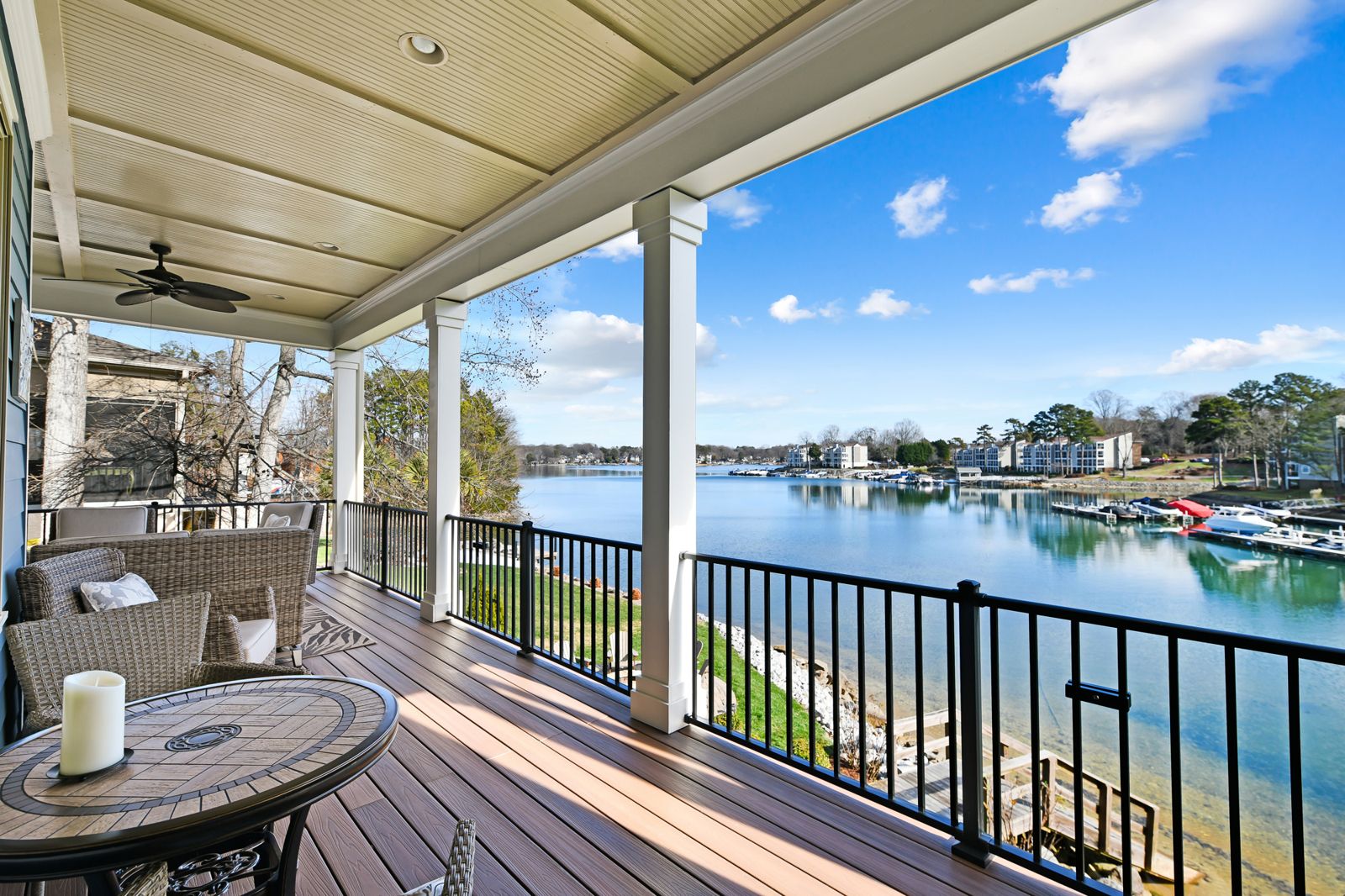
What shape are the seawall and riprap in, and were they permitted?
Look at the shoreline on your first visit and have someone qualified look again during due diligence. Shoreline stabilization inside the project boundary needs Duke’s written authorization, and it is a cost nobody inspects like the roof.
- Duke’s order of preference. Duke encourages bioengineering and plantings before riprap, and calls seawalls the last option. Seawalls are not allowed where the average eroded bank is less than three feet high.
- Where riprap can go. Riprap must stay between six feet below full pond and full pond, with limited exceptions, and a layer of riprap extending six feet lakeward must sit along the base of a bulkhead.
- The permit. Duke’s fee schedule lists riprap and seawall applications at $500. Ask the seller for the permit for any stabilization along the frontage, just as for the dock.
Source: Duke Energy, Catawba-Wateree Shoreline Management Guidelines (October 3, 2016), Section 5, items 6, 8 and 17; Duke Energy Lake Services Fee Schedule, effective January 15, 2025.
Cove or open water on Lake Norman: what changes?
The main body of the lake brings long views and more wind and wake; a cove brings calmer water and a narrower space in front of the dock. Neither is better, and the rules treat them differently.
- Room to maneuver. A new or expanded private dock must leave at least 25 feet of clear water between its farthest point, including a moored boat, and the opposite shoreline or a dock across from it. Duke will not authorize a new private dock in a cove less than 25 feet wide.
- The one-third rule. Because a dock cannot reach more than a third of the way across, the width of the cove sets the length of any dock in it.
- Property lines on the water. Duke projects each lot’s lines out into the lake, and a dock or moored boat may not cross them without a written release from the neighbor.
Who decides the no-wake buoys on Lake Norman?
Not Duke, and not the homeowner. Duke’s FAQ says no-wake buoys on Lake Norman are overseen by the marine commission, and that boating is regulated by local law enforcement and the N.C. Wildlife Resources Commission. The Lake Norman Marine Commission is meeting in 2026; its May 21, 2026 minutes report work with partner agencies on a standard protocol for residential requests for new or removed no-wake buoys. Treat a buoy in front of a house as something that can change, and do not count on adding one.
What community rules apply at the water?
Read the covenants, the HOA documents and any slip rules before you write the offer, because Duke does not enforce them and will not waive them.
- Duke stays out of neighborhood rules. Its FAQ says Duke does not participate in neighborhood requirements for shoreline structures, and has no involvement in enforcing Crescent Resources covenants; questions about those go to Crescent Resources.
- A community slip can rule out a private dock. Under Duke’s guidelines, an owner assigned a slip in a common-use facility that is part of a master-planned development may not leave that arrangement and build a pier from the lot.
- Rental rules. If you are thinking about a short-term rental, read the covenants for any minimum rental term first.
Do you need your own buyer’s agent to buy a waterfront home on Lake Norman?
No law requires one, but the agent marketing the house represents the seller, and North Carolina has no default form of representation: a broker represents a buyer only with the buyer’s express consent (North Carolina Real Estate Commission, April 2021). A buyer agency agreement has to be in writing and signed no later than the time you make an offer (North Carolina Real Estate Commission, May 2024). Then the timing works in your favor: during the due diligence period in the standard North Carolina contract, you can end the contract for any reason or no reason, and the Commission lists home, pest and septic inspections among the work done in that window.
On the water, that window is where we put the dock permit, the survey, the depth, the flood quote, the septic file and the shoreline. Wendy and Sean both work with our waterfront, luxury and relocating buyers, from Mooresville to Sherrills Ford. Before you tour, search homes and new listings by town on our Lake Norman communities pages, read the month’s numbers in the Lake Norman market report, and if you are moving to Lake Norman from out of state, see how a house hunt works from a distance on relocating to Lake Norman.
The Lake Norman waterfront buyer checklist
Print it, or take it to every showing. Nothing to sign up for.
| Item | What to request | Who answers it |
|---|---|---|
| Dock permit | Pier permit and application in the seller’s name, the tag number, and a list of anything added since | The seller (Duke releases history only to the owner named on the permit) |
| Changes you want | Duke approval obtained by the seller before closing | Duke Lake Services, through the seller’s application |
| Where the lot ends | A survey showing the 760 line, the shoreline footage and the 50-foot buffer; the plat’s recording date | Surveyor and your closing attorney |
| Water depth | Depth at the end of the dock with the date and Duke’s lake-level reading | The seller, then your own check on a tour |
| Flood | FEMA flood zone for the address, an elevation certificate if one exists, and a flood insurance quote | FEMA Flood Map Service Center and your insurance agent |
| Septic | County operation permit with the bedroom count, last pumping date, and a certified inspection | County environmental health and an NCOWCICB-certified inspector |
| Shoreline | Duke permits for any riprap or seawall; condition checked by someone qualified | The seller and a qualified marine or shoreline contractor |
| The water in front | Cove width, any bridge between the dock and open water, buoys in place | Your own visit, by land and by boat if you can |
| Community rules | Covenants, HOA documents, slip rules, rental terms | The HOA and your closing attorney |
Ready to search homes on the water? Tell us the water you want, the boat you have and the price band, and we will send new listings on Lake Norman as they come on, with the due diligence questions already asked.
Common questions
Who owns the land under Lake Norman?
Duke Energy owns or controls the lakebed, and its project boundary follows the 760-foot full-pond line. Where a given lot stops is in its deed and survey; Duke sends property-line questions to a real estate attorney.
Can I get the dock permit history before I buy a lake house?
Not directly. Duke releases permitting history only to the current owner, and only once the permit is in that owner’s name. Ask the seller for the permit, the application and the tag number.
What happens if the dock does not match its permit?
When you transfer the permit after closing, Duke inspects the dock, and Duke says the applicant or current owner will likely be responsible for correcting unapproved changes. Find out before closing.
How big can a private dock be on Lake Norman?
Up to 1,000 square feet with two slips or boat hoists, plus up to two personal watercraft mooring devices, and no longer than one-third of the way across or 120 feet past full pond, whichever is shorter.
Do I need flood insurance on a Lake Norman waterfront home?
If the house is in a FEMA high-risk flood area and the mortgage is from a government-backed lender, yes. Check the address on FEMA’s Flood Map Service Center and get a quote during due diligence; most homeowners policies do not cover flood.
Can I build a dock on a waterfront lot with no house yet?
Ask Duke before you count on it. The lot also has to meet the shoreline-footage rule: under 100 feet of shoreline, a new pier needs a plat recorded before September 1, 2006.
Sources
- Duke Energy, Lake Use Permitting FAQ (©2024, 1/24): lakebed ownership, LAPS transfers and inspection, permit history, lake-level line and app, public use, buoys, neighborhood rules, attorney referral. Read November 7, 2026.
- Duke Energy, information sheet for prospective lake property owners (April 2018). Read November 7, 2026.
- Duke Energy, Catawba-Wateree Shoreline Management Plan (October 3, 2016): Lake Norman full pond 760.0 feet; project boundary. Read November 7, 2026.
- Duke Energy, Catawba-Wateree Shoreline Management Guidelines (October 3, 2016; still the version Duke links on its Catawba-Wateree Shoreline Management Plan page): private facilities, shoreline stabilization, and the glossary terms for full pond (100.0 feet) and the normal operating range. Read November 7, 2026.
- Duke Energy, Lake Services Fee Schedule, effective January 15, 2025. Read November 7, 2026.
- 15A NCAC 02B .0614, Catawba River Basin riparian buffers. Read November 7, 2026.
- FEMA, Flood Map Service Center and flood insurance pages. Read November 7, 2026.
- 15A NCAC 18E .0601 (NC Administrative Code, as amended effective June 1, 2026); G.S. 90A-72; NC REC form REC 4.22 (REV 7/26). Read November 7, 2026.
- North Carolina Real Estate Commission bulletins, “Buyer Agency Agreements” (May 2024), “Getting Agency Representation Right” (April 2021) and “Due Diligence Questions and Answers.” Read November 7, 2026.
- Lake Norman Marine Commission, regular meeting minutes, May 21, 2026. Read November 7, 2026.