
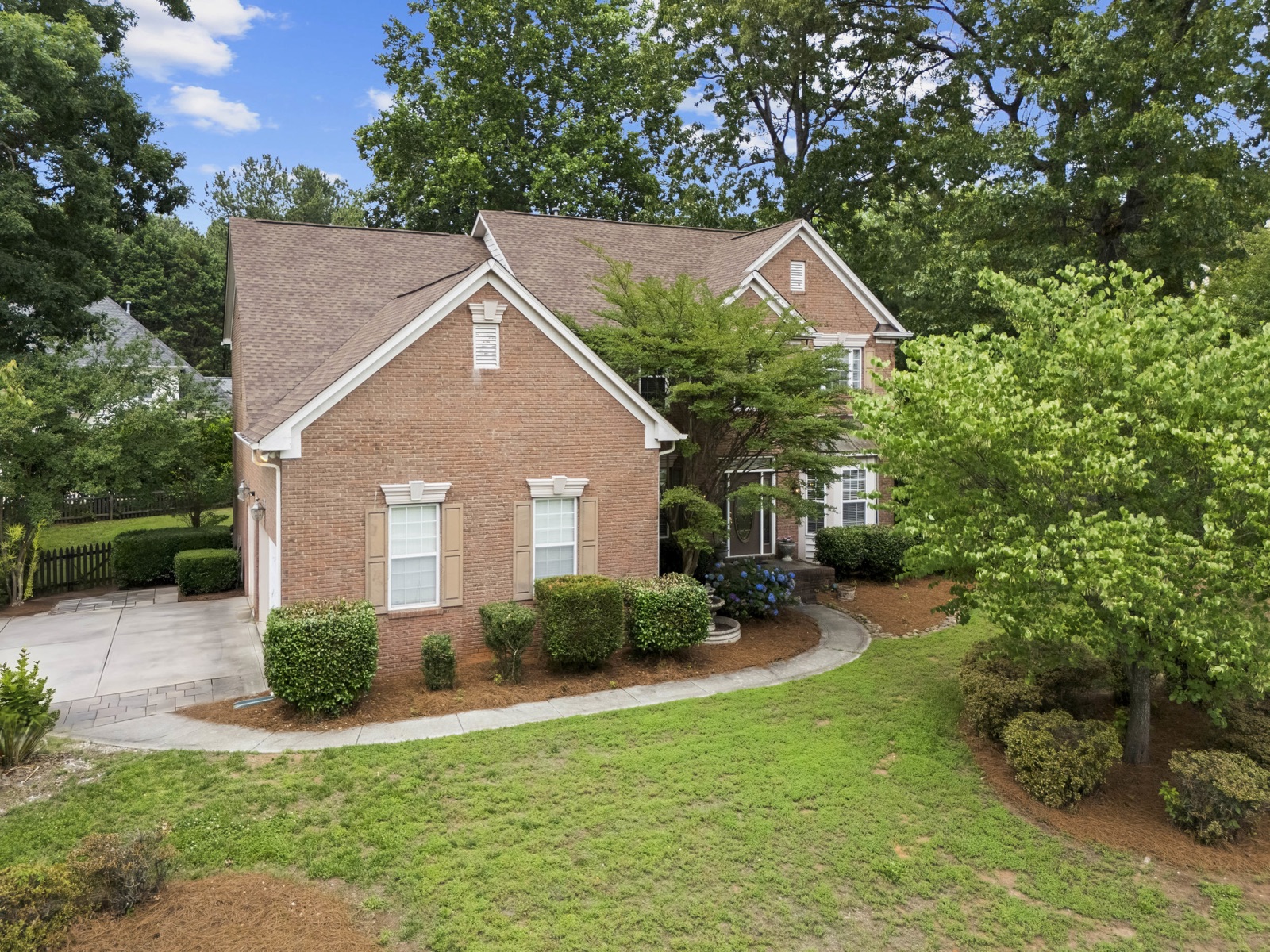
To sell your house yourself in Lake Norman or Greater Charlotte, price it to the recent closed sales rather than an online estimate, market it like a listing, decide the buyer’s-agent question in writing before the first showing, let a North Carolina attorney close it, and pick the date on which you’ll look at the other options. This page is Winston Dane at eXp Realty’s by-owner help, free. Call or text 704-912-0999.
Pricing: the reliable range, why owners launch high, and what the first 30 days tell you
Pricing is the task owners selling by owner name as the hardest (National Association of REALTORS®, 2025 Profile). It is hard because the question is usually asked wrong. Not what is the house worth, as one number, but where in the range should the first price sit, and why.
Price against the range, not one number
Every address has a range the recent closed sales of comparable homes support. The Zestimate is one algorithm’s guess with no reasoning shown; the neighbor’s number is one sale with a story attached. Pull the three or four closest recent sales, write down what is different about each (lot, water, condition, year of the roof), and the range appears. Then decide where in it to sit. At the top, you are waiting for one buyer who loves it. In the middle, you are competing. Below it, you are inviting a fight over the inspection.
Why owners launch high, honestly
NAR’s 2025 Profile puts the median by-owner sale at $360,000 against $425,000 with an agent, an 18% gap, and NAR itself cautions in the same report that by-owner sales skew toward less expensive rural and manufactured homes, so the gap is partly the homes, not the owner. Our own read says the same from the other side: the 59 Lake Norman-to-Charlotte by-owner listings on Zillow in October 2026 had a median asking price near $499,000, move-up and lake houses priced like listings. The risk here is not selling cheap. It is launching high and sitting. In Clever’s survey of by-owner sellers (self-reported, no sample size published), 64% missed the price they wanted and 49% wished they had priced differently.
What 184 expired listings say about launching high
These were agents’ listings, not by-owner sales, and the lesson transfers. Of 184 expired Lake Norman and Charlotte-area listings we reviewed, 36% launched above the top of their own value range. 122 cut the price at least once, a median cut of about $25,000 (4.9%). 61 finished below the midpoint of their range and still did not close: the cuts came after the buyers who would have paid had already seen the house and passed. Price cuts are how a listing follows the market down. Launching right is how it leads.
The days-on-market math, plainly
Buyer attention is highest in the first two weeks on Zillow. After that the page goes stale and the price-cut trail becomes part of the listing. A second launch costs more than a right first one, which is the business reason every home we list runs on the 7-Day Stress-Free Home Sale: a Coming Soon period builds the audience, one launch day spends it.
How to read your own first 30 days
Views, then saves, then showings, then offers. Lots of views and no showings is a price or first-photo problem. Showings and no offers is a condition or expectation problem. Saves climbing while showings stay flat means buyers are watching for a cut; the longer you wait, the more of them are waiting. Read your own numbers every Sunday night and write them down.
The town numbers, and the number for your address
Median days on market and months of supply for Cornelius, Davidson, Huntersville, Mooresville, Denver, Sherrills Ford, Terrell, Troutman and Statesville are on our Lake Norman market report, from Canopy MLS data. The Sellability Score asks ten questions and tells you how fast a house is likely to go at your plan. The range for your address, with its reasoning shown (the comparable sales and what is different about each), is on the free Net Sheet or the 15-minute call. We never print a value for a specific home on a page.
Selling a lake house or waterfront property by owner? Say so on the form. The range is wider and the comparable sales are fewer, and the water (frontage, depth at full pond, the dock permit) sets more of the price than the square footage does.
Get the range for your address on the free Net Sheet. Three columns, built by a person, sent within one business day.
Get the Net SheetThe North Carolina contract, in plain words
This is a general explanation of how a North Carolina residential sale usually runs. It is not legal advice, the forms change, and your situation may differ. North Carolina closes through an attorney; ask yours before you sign anything. We explain the documents here so you know what you are looking at. We never draft, fill out or review your contract.
The paperwork is where a by-owner sale most often falls apart at the attorney’s office: in Clever’s self-reported survey, 43% of by-owner sellers admitted a legal or paperwork mistake. Here are the documents, in the order they show up.
1. The Offer to Purchase and Contract (Standard Form 2-T)
The contract nearly every North Carolina residential sale is written on, jointly published by NC REALTORS® and the North Carolina Bar Association and revised every year. The 2026 edition is current. If a buyer’s agent brings you an offer, this is almost certainly the form. It is copyrighted and it changes yearly, so we do not link or reproduce it here; rather than hand you a copy, we walk through the 2026 edition on screen, page by page, in the video for this section, which will sit here once it is recorded. The parts that matter most to a seller are the purchase price, the due diligence fee and period, the earnest money, the settlement date, and the list of what stays with the house. Ask your attorney before you sign it.
2. Due diligence fee vs. earnest money: two different checks
The due diligence fee is paid by the buyer to you when the contract is signed, for the right to investigate the property and walk away for any reason during the due diligence period. You keep it if the buyer terminates; it is credited to the buyer at closing if the sale closes. The earnest money deposit is held by an escrow agent (a closing attorney or a brokerage trust account), refunded to the buyer if they terminate during due diligence, and otherwise credited at closing. The length of the period and both amounts are negotiated in the contract. In practice a seller does not hold the earnest money themselves. Source: the NC Real Estate Commission’s bulletins on due diligence, linked under Sources.
3. North Carolina is an attorney-closing state
There are no escrow companies. A licensed North Carolina attorney handles title, prepares the deed and disburses the funds. Under the State Bar’s Authorized Practice Advisory Opinion 2002-1, a non-lawyer may not prepare the deed or other legal documents, abstract title, or advise either party on their legal rights in a residential closing. The buyer usually chooses the closing attorney; you may use the same attorney or your own. A Cornelius or Mooresville closing attorney will want to hear from you early, especially about a home-equity line, a solar lease or an HOA transfer fee.
4. The Residential Property and Owners’ Association Disclosure Statement
Required by the North Carolina Residential Property Disclosure Act (General Statutes Chapter 47E) for the sale of a home with one to four units whether or not a broker is involved, so a by-owner sale is covered. You answer each item Yes, No or No Representation; choosing No Representation on an item means no duty to disclose that item, even one you should have known about (47E-4(c)). Timing: you must deliver it no later than the time the buyer makes an offer. If it is delivered late, the buyer may cancel the contract, without penalty and with the deposit refunded, until the earliest of: the end of the third calendar day after receiving the statement, the end of the third calendar day after the contract is made, or settlement or occupancy (47E-5). Exempt: the first sale of a never-inhabited home, transfers between co-owners or to a spouse or lineal relative, court-ordered and fiduciary transfers, and a sale where buyer and seller agree in writing not to complete it (47E-2). If the statement becomes materially inaccurate before closing, you must correct it (47E-7). The form is the Commission’s REC 4.22, linked under Sources.
5. The Mineral and Oil and Gas Rights Mandatory Disclosure Statement
A separate Commission form required by 47E-4.1, even for some sales exempt from the property disclosure (a never-inhabited home, a lease-option, or a sale where the parties waived the property disclosure). Six yes-or-no questions on whether mineral rights and oil-and-gas rights have been severed by a previous owner, by you, or will be before closing. No Representation is allowed only for a previous owner’s severance. The text may not be altered. Same delivery timing as the property disclosure.
6. Lead-based paint, for homes built before 1978 (federal)
You must disclose known lead-based paint and hazards, give the buyer any records, give them the EPA’s lead pamphlet (linked under Sources), attach the lead warning statement to the contract, and give the buyer a 10-day opportunity, changeable by agreement, for a lead inspection before they are bound. Keep the signed disclosure for three years. Source: EPA, Lead-Based Paint Disclosure Rule fact sheet (40 CFR 745 Subpart F; 24 CFR 35 Subpart A).
7. What a buyer’s agent hands you first: the Working With Real Estate Agents disclosure
North Carolina brokers must review this Commission disclosure with you at first substantial contact. For an owner selling by owner, the relevant section is Buyer Agent Working with an Unrepresented Seller. It says, in the form’s own words, that the agent will not be representing you, has no loyalty to you, represents only the buyer, and that you should not share confidential information with them: your bottom line, your timeline, why you are selling. Signing it acknowledges receipt; it is not a contract. If the buyer has a written agreement with their agent (a listing agent has one with a seller; a buyer’s agent now has one with the buyer), their fee is set there, not by you. More on that in the next section.
8. What an unrepresented seller signs, and when
Before any offer: the two disclosure statements (items 4 and 5) and, for a pre-1978 home, the lead disclosure (item 6). You receive and sign the buyer’s agent’s Working With Real Estate Agents disclosure (item 7). The offer arrives on Form 2-T, usually with addenda (commonly additional provisions, FHA or VA financing, a back-up contract, and after inspections a written due diligence request and agreement). You sign; the contract is effective when the last party signs and delivers it. The due diligence fee check comes to you; the earnest money goes to escrow. The due diligence period runs (inspections, appraisal, loan, repair negotiation). Then the settlement date: at the attorney’s office you sign the deed, a lien affidavit or owner’s affidavit, and the settlement statement. The attorney records the deed and then disburses, under North Carolina’s Good Funds Settlement Act (General Statutes Chapter 45A). Possession is usually at recording unless the contract says otherwise. Ask your attorney about every date in it.
9. What a seller commonly misses, in one list
- Delivering the disclosures after the offer, which opens the three-day cancellation window.
- Cashing the due diligence check and treating it as earnest money.
- Agreeing to repairs verbally. Nothing agreed by text or phone counts.
- Letting the due diligence period lapse without an extension in writing.
- Signing a back-up contract that conflicts with the first one.
- Not telling the attorney about a home-equity line, a solar lease or an HOA transfer fee.
The FSBO Contract Checklist puts these nine documents on one page: who prepares each, when it has to be delivered, and the line “take this to your attorney.” It is being written now; until it is posted here, the 15-minute call walks you through the sequence for your sale.
Book the free 15-minute callWho pays the buyer’s agent now (after August 17, 2024)
The newest by-owner pain point, and the one generic guides skip. Here is the straight answer.
What changed
On August 17, 2024 the NAR settlement practice changes took effect nationwide: a buyer’s agent must have a written agreement with the buyer before touring a home, that agreement must state the agent’s fee as a specific amount or rate (not open-ended, not a range), and the agent may not collect more than it says from any source. Offers of compensation can no longer appear in the MLS. Source: NAR’s settlement facts page and its August 1, 2024 practice-change reminder, both linked under Sources.
What it means for an owner selling by owner
Nobody has to pay a buyer’s agent unless they agree to. The buyer’s fee is set in the buyer’s own agreement, not by you. When a represented buyer writes an offer, they will usually ask you to cover some or all of their agent’s fee as a seller concession, in the contract. You can say yes, no, or a number.
What most sellers still do
Most by-owner sellers still ended up paying a buyer’s agent, often as a concession at offer time (Clever survey as cited by NAR, 2025). Redfin and The Close report that sellers remain the most common payer and that most listings still carry some buyer-side compensation. We do not state a typical percentage of the price anywhere on this page, because we cannot source one.
How to decide, three ways, each with its trade
- State up front, in writing, that you will consider buyer-agent concession requests as part of any offer. The widest pool; the fee is decided offer by offer.
- State a specific amount or percentage you will pay. Simplest for agents deciding whether to show the house, and it fixes the number before you see the offer.
- Offer nothing. The narrowest pool; a represented buyer then pays their agent out of their own budget, or walks.
Put it in writing
One plain sentence in your listing description and on your showing sheet, and in the contract as a seller-paid closing-cost line. A verbal “we’ll think about it” is how the one qualified buyer ends up writing on a different house. When you list your home, the same question is answered in the listing agreement before the sign goes up.
The Net Sheet line
This is the line most “we saved the commission” math leaves out. The Net Sheet’s selling-alone column includes it, at whatever a buyer has asked for, so you can see how it sits either way.
How to market it like a listing, not like a classified ad
Preparing and marketing the home is the second hardest by-owner task (NAR, 2025). These are the same ten marks we run on every launch, in your language.
Photos: the lessons from 184 expired listings
Of the 184 expired listings we reviewed, 96 repeated near-identical frames (the most common finding), 65 photographed rooms empty (the owner had moved out and the house was carrying itself), and 63 launched with an exterior shot in winter with bare trees, a season the photos could not survive into spring. The rules that follow: shoot in the season you are selling in, and reshoot when it changes. Every room a buyer decides on: the kitchen, the primary bath, the outdoor living. No repeated or wasted frames. The first photo chosen to earn the click, and an order that builds. The decision rooms cleared and ready before the camera comes. On a lake house or waterfront property: the water from the house and the house from the water, the dock, and the depth at full pond if you know it. Phone photos on a gray afternoon are the one cheapest thing to fix; we recommend a professional shoot.
Hidden upgrades
A buyer scrolling at 11 pm cannot see the new roof, the encapsulated crawl space, the tankless water heater or the irrigation well. If it is not in a photo or the first three lines, it did not happen. List every upgrade with its year on a one-page sheet (the Open-House Sheet, below).
The listing description
Open on what is genuinely rare about this house. Of the 184, 91 descriptions never named the neighborhood or the street, and generic copy was the second most common finding. Name the neighborhood, the street, the water or the view, the lot, the specifics with numbers. State the location advantages instead of assuming them: minutes to I-77, the Langtree exit, the greenway. Describe the property, never the people. Nothing about who the house is for, no household words, no district names (the MLS sheet carries the assigned district as a fact if you list). Write the whole description for the one buyer this house is rare to.
Zillow and the by-owner sites
Zillow’s owner posting is where almost every active by-owner listing is; it is where the 59 we read came from. Realtor.com and Homes.com do not take owner listings directly; they pull from the MLS. Zillow has moved by-owner listings between tabs more than once, so check where yours is displayed the week you post it, and ask a friend to find it cold.
The flat-fee MLS option
A limited-service (“entry-only”) broker can enter your home in Canopy MLS for a flat fee. You keep the showings, the negotiating and the paperwork, and the listing then syndicates to Realtor.com, Homes.com and the brokerage sites buyers’ agents actually search. The trade: you are still unrepresented, and Canopy’s rules bind the listing broker, not you. We name the option because it is real; we do not name a vendor.
Signs
A yard sign and directional signs at the entrance. A text-for-info line on the sign works better than a phone number alone. Check the HOA’s sign rules first. No North Carolina licensing rule applies to an owner’s own sign; ours carry the firm name because the rule applies to us.
Open houses: run your own
Saturday 1 to 3, the week it launches and again after a price change. A sign-in sheet, a one-page fact sheet with the upgrades listed, and your buyer’s-agent sentence on it. Two people in the house. We do not host or staff your open house; what we give you is the checklist for running your own, in the Open-House Sheet below.
Social
Post it where the buyers for this house already are: the town Facebook groups, Nextdoor, your own page with a photo set. One photo per post, never the identical post twice. We keep a roster of the Lake Norman groups and their posting rules; ask for it on the call.
Make it easy to show
A buyer’s agent decides in ten seconds whether to show your house: a clear showing method (an appointment line or a lockbox), your buyer’s-agent answer in writing, the disclosures ready, and a sheet they can hand their buyer. Make it easy to show and it gets shown.
Want a second set of eyes on your listing? The 15-minute backup-plan call reads your Zillow page the way a buyer does: three specifics, kindly, the first one something you did well.
Book the free 15-minute callShowings and your safety: who is in your house, and what to say
The fear nobody mentions is strangers on a Saturday. Here it is, solved on one card.
Vet before the door opens
Name, phone and a photo ID for every visitor; for a buyer without an agent, a lender’s pre-approval letter or proof of funds before the first showing, not before the offer. A buyer’s agent will have both; ask for them anyway.
Pre-approval vs. pre-qualification vs. proof of funds
A pre-qualification is a conversation. A pre-approval is a lender’s letter after documents. Proof of funds is a bank statement for a cash buyer. Read the letter: lender name, date, amount, and whether it is conditioned on the sale of another house. Not sure what a letter is telling you? Send it with your Net Sheet request and we will help you read it.
Lockbox vs. appointment
A lockbox is for agents with a showing service behind it. For an owner, appointments only, and you confirm each one by phone the morning of.
Never alone
Two people at every showing and every open house. One entrance in use. Medications, mail, laptops, keys, jewelry and anything with your name on it put away. Phone in your hand. Walk behind, not ahead. Let them open the closets.
What to say and not say
Say: the facts on the sheet, the upgrades, the neighborhood. Do not say: why you are selling, when you need to be gone, what you paid, what you would take, or what is wrong that is not on the disclosure (it goes on the disclosure, not into conversation). The buyer’s agent is trained to listen for all of it; the Working With Real Estate Agents disclosure they handed you says so.
After the showing
A text to the agent or the buyer that evening: thanks, and one question, “anything that would keep you from writing?” The answers are your pricing data.
Fair housing applies to you too
An owner selling a home must not refuse to show, or treat a visitor differently, on the basis of race, color, religion, sex, disability, familial status or national origin. Show everyone the same way. Source: U.S. Department of Housing and Urban Development, fair housing.
The Showing Safety Card (before, during, after, and a sign-in block) is being written now. Questions about a buyer’s letter? Send it with your Net Sheet request.
Get the Net SheetNegotiating and inspections: the due diligence period in practice
The contract section says what the documents are. This is what actually happens in the two to three weeks after you sign.
The due diligence period is the buyer’s
They can inspect, appraise, apply for the loan and walk away for any reason or none, forfeiting the due diligence fee. Your job is to make the house easy to inspect and to answer repair requests in writing, on time.
Repair requests
They usually arrive as a written request, in North Carolina commonly on a due diligence request and agreement form. You can agree, decline, counter, or offer a credit instead. Nothing agreed verbally counts; it goes into a signed agreement or an amended contract. Ask your attorney before you sign anything that changes the contract.
Repairs vs. credits
A credit (seller-paid closing costs or a price reduction) is simpler, closes on time, and lets the buyer pick the contractor. A repair you do yourself has to be done to the buyer’s satisfaction before closing, with receipts. Lenders cap seller-paid closing costs by loan type; the buyer’s lender will say the number, and a credit above the cap has to become a price reduction instead.
The appraisal gap
If the appraisal comes in under the contract price on a financed deal, the lender lends on the appraisal. Four ways out: lower the price to the appraisal, the buyer brings the difference in cash, split it, or the buyer terminates inside due diligence. Decide your floor before the appraisal, not after.
Back-up offers
If a second buyer appears while you are under contract, a back-up contract addendum puts them in line without breaching the first contract. Never sign two primary contracts.
Extensions and the settlement date
Every date in the contract is a date. An extension is a signed amendment, not a text. The attorney’s office cannot close on a verbal.
When to call us
A repair request you do not know how to answer, an appraisal under contract, a buyer going quiet in week two. These are the fifteen-minute questions, and the Seller Strategy Call is where we answer them. No pitch.
Under contract and unsure how to answer something? Book the 15 minutes.
Book the free 15-minute callThe ten mistakes to avoid, one sentence each
Each one is drawn from the national research or from the 184 expired Lake Norman and Charlotte-area listings we reviewed (agents’ listings; the lesson transfers). Each is a thing to do instead.
- Pricing to the Zestimate instead of the recent sales. Pricing is the task by-owner sellers name as hardest (NAR 2025), and 36% of the 184 launched above the top of their own range.
- Cutting late, in small steps. 122 of the 184 cut the price (median about 4.9%), after the buyers who would have paid had already seen it; a right first price beats three cuts.
- Launching in the wrong season’s photos. 63 of 184 carried a bare-trees exterior, a Denver home launched into winter branches among them; shoot the season you are selling in.
- Repeating photos and skipping rooms. 96 of 184 repeated near-identical frames; a buyer decides on the kitchen, the primary bath and the outdoor space, so show each once and well.
- A description that never says where the house is. 91 of 184 never named the neighborhood or the street; open on what is rare about this one.
- Moving out first. 65 of 184 photographed empty rooms; an empty house photographs smaller and carries two payments.
- No written answer on the buyer’s-agent fee. “We’ll think about it” is how the one qualified buyer writes on a different house.
- Showing the house to anyone who calls. No ID, no pre-approval, alone in the house.
- Treating the paperwork as a formality. Disclosures delivered after the offer, the due diligence check mistaken for earnest money, repairs agreed by text; 43% of by-owner sellers admit a legal or paperwork mistake (Clever, self-reported).
- Pausing instead of deciding. 22 of the 184 were pulled “temporarily” and the pause became the end; pick the date on which you will look at the other options, and keep it.
If you later list, the Relaunch Review is the ten-point review we run before one photo goes up. Not sure which of these your listing is doing? Fifteen minutes, three specifics, no pitch.